
Our History
ATAE has been developing state-of-the-art analog magnetic audio tape reproducers since 1987. Based on legendary Studer A80 and A820 tape transport platforms that we extensively remanufacture with proprietary mechanical and electronic upgrades, our reproducers maximize playback accuracy while minimizing wear on often fragile historic master tapes. Our focus on playback optimization assures recovering the highest possible sonic fidelity from any tape, while also conserving delicate, irreplaceable heritage master recordings.
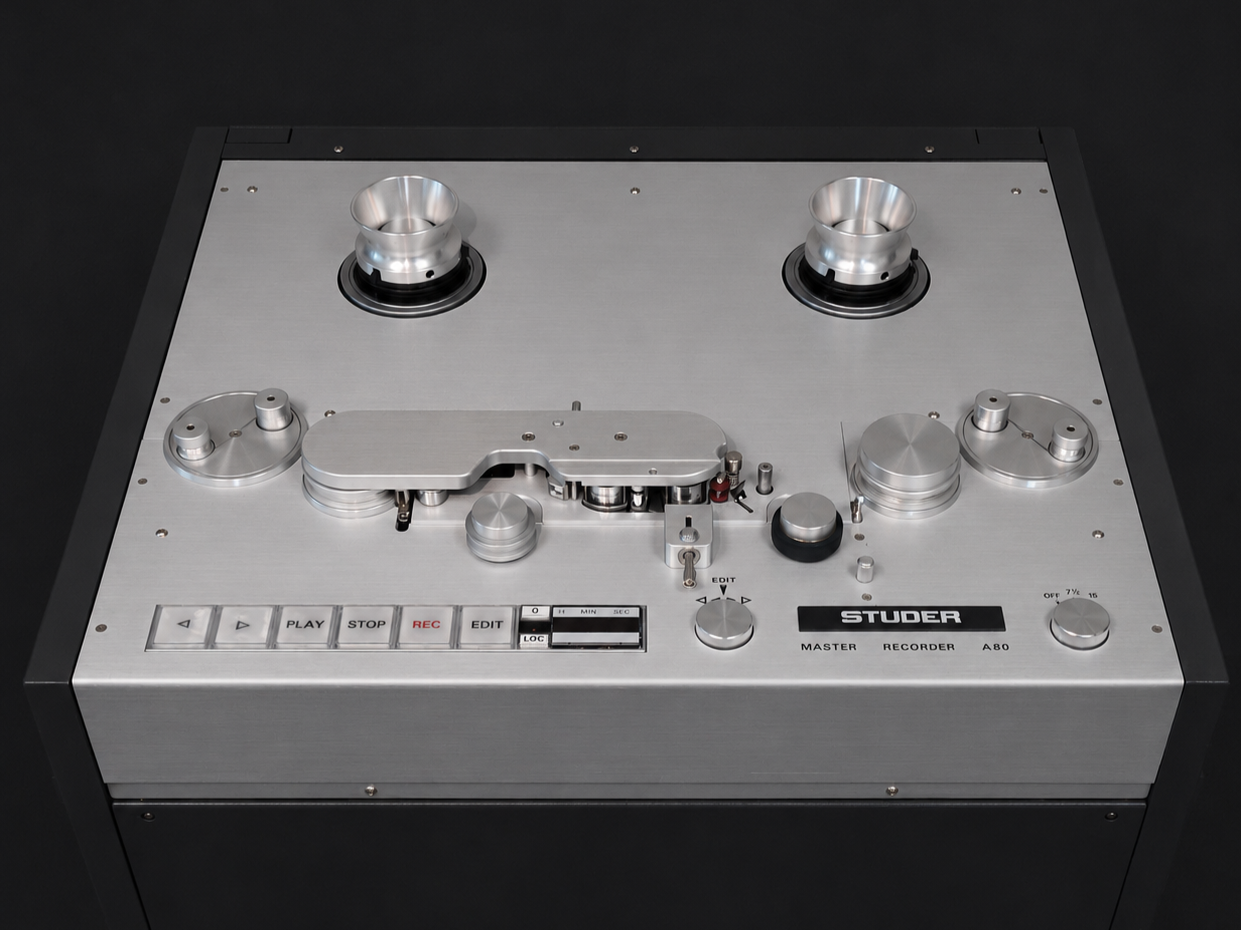
When the A80 was first demonstrated to the public in 1970, highly experienced critical listeners from Europe's premier classical record labels were stunned by the new level of sonic clarity and purity. Many wrongly assumed that this was the result of some kind of new audio circuitry. It wasn’t. It was the tape transport mechanism.
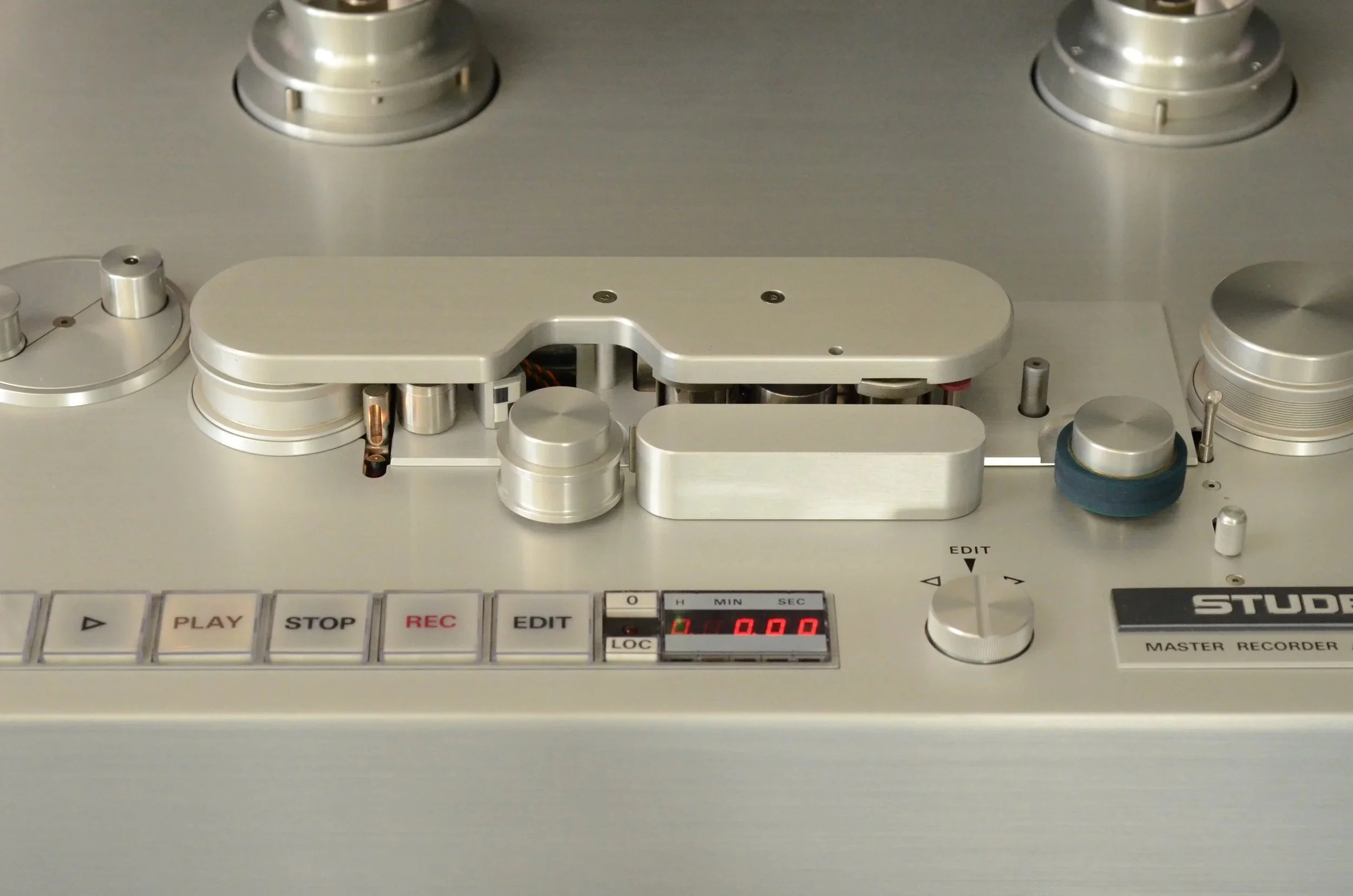
Studer’s manufacturing of an A80 transport mechanism alone cost several times what competing professional analog tape recorder-reproducer manufacturers spent on building their complete product.
Notable on the A80 is the uncommon attention paid to minimizing tape stress and wear, design considerations that no other manufacturer considered or believed necessary.
An A80 has no fixed guides, no lifter-pins and does not employ forced-guidance through the head block or anywhere. Instead, it employs costly-to-manufacture features including straight-line all-rolling element headblock by-pass spooling, full servo constant-tension for all winding modes and precision guidance maintained throughout the tape path.
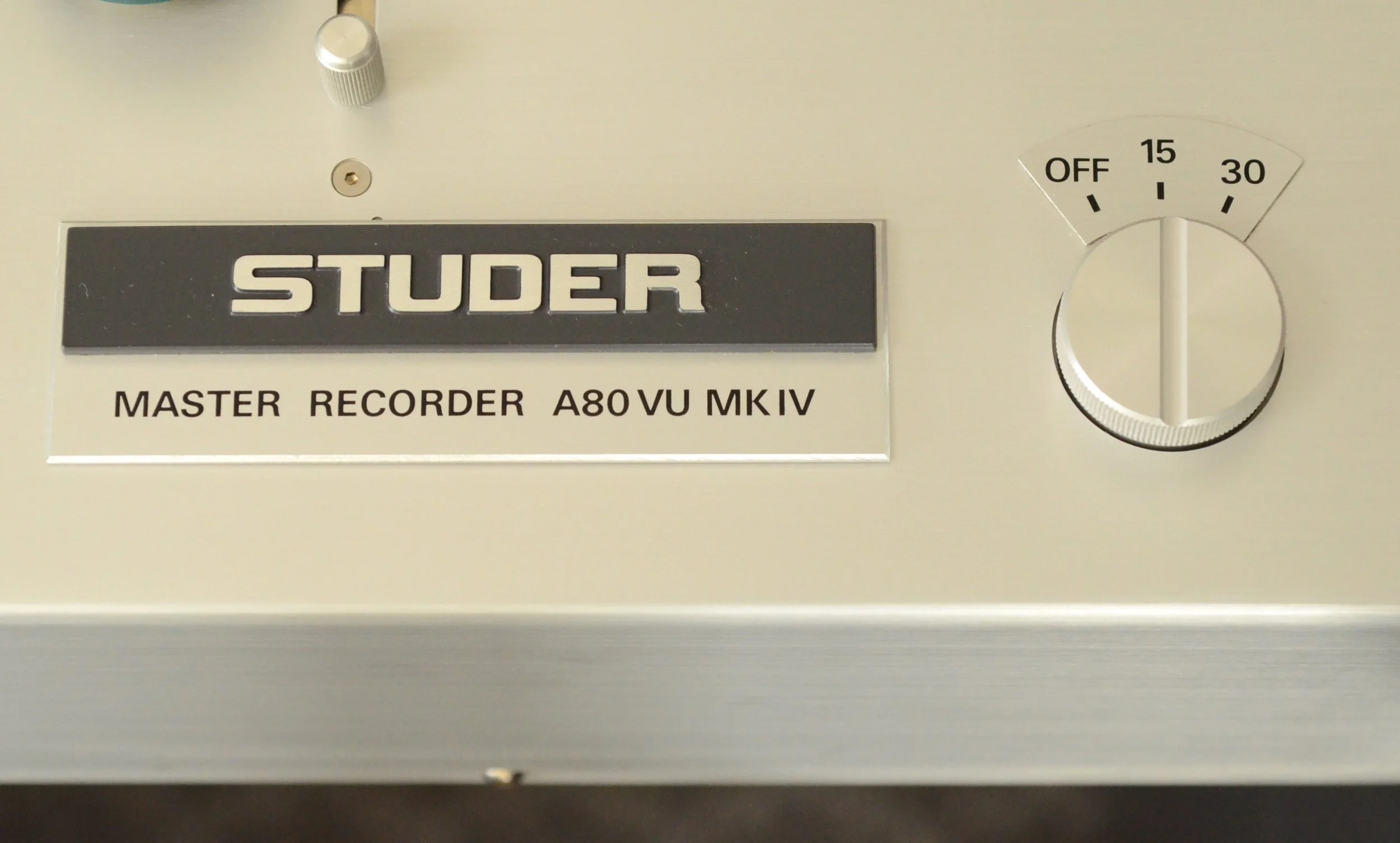
The A80 VU Mark IV represented the culmination of eighteen years of A80 production.
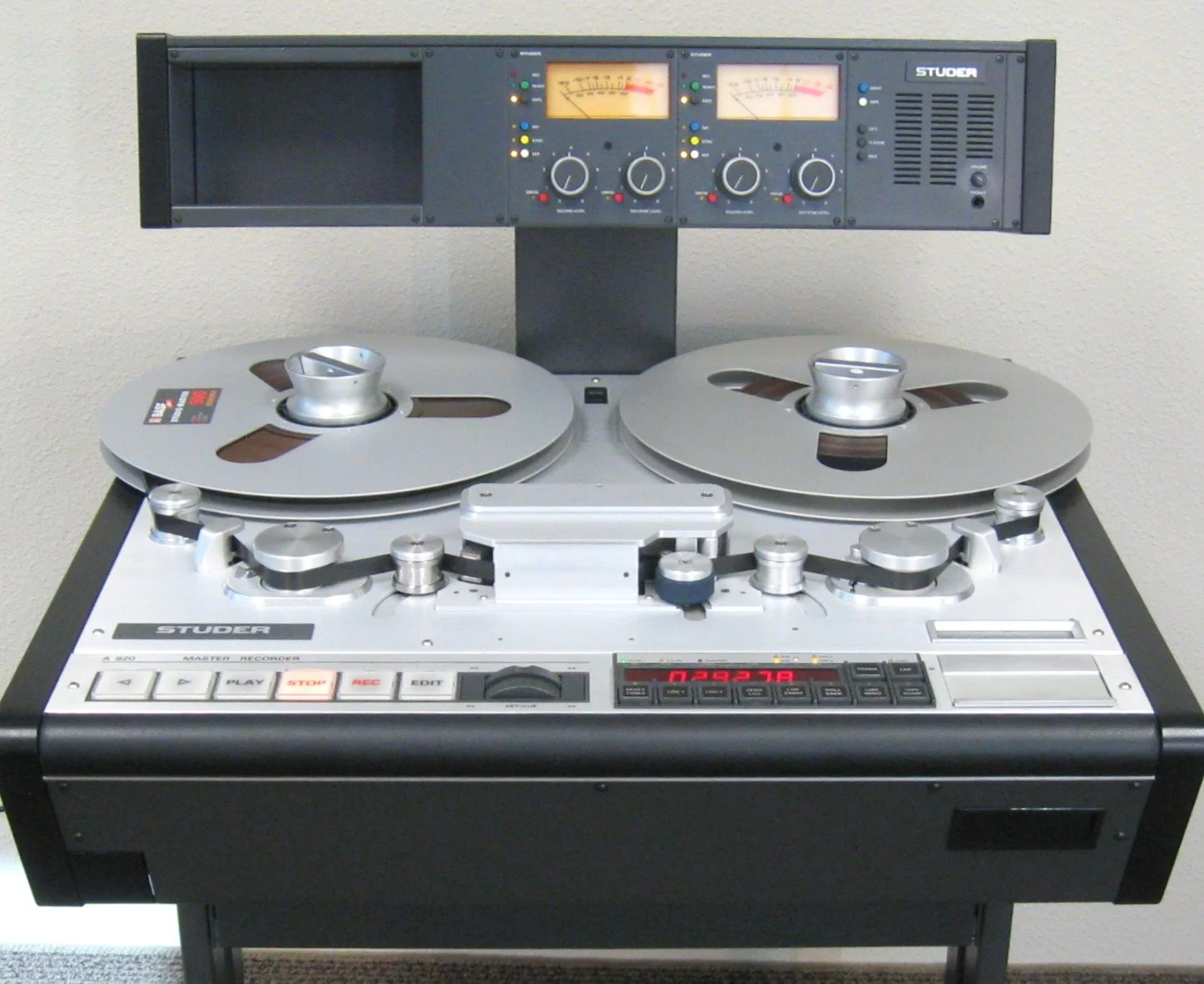
Introduced in the mid-1980s to replace both the A800 and A80 as well as serve in the future as Studer’s premier multi-channel DASH (digital audio stationary head) platform, Studer’s all-new A820 enabled direct operator control of tape tensions. ATAE used this advancement to easily fit “SHRO” head blocks (SHRO is our initialism for single-head read-only) that can run at ONE-HALF of normal tensions, a modification that can result in nearly EIGHT TIMES less abrasive wear to tapes than seen on a conventional three-head recorder-reproducer. SHRO architecture can nearly eliminate high-band flutter, an audible improvement.
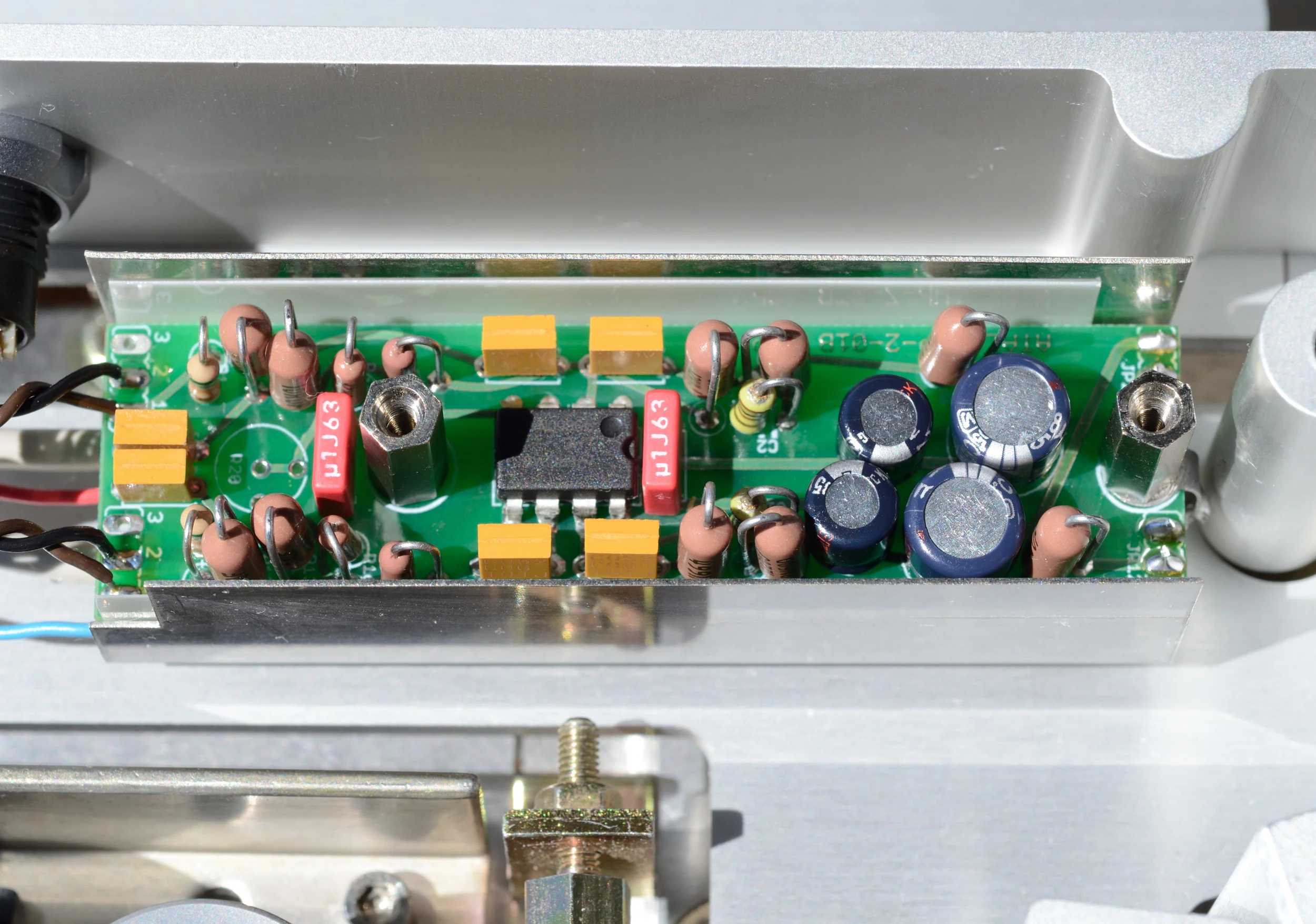
There is debate on who was first to place the first stage of gain inside the headblock next to the read (repro) head, but there is no question that this is the optimum design practice in small signal engineering. Shown here is an early ATAE replacement THP (tape head pre-amplifier) installed in a Studer A820 headblock.
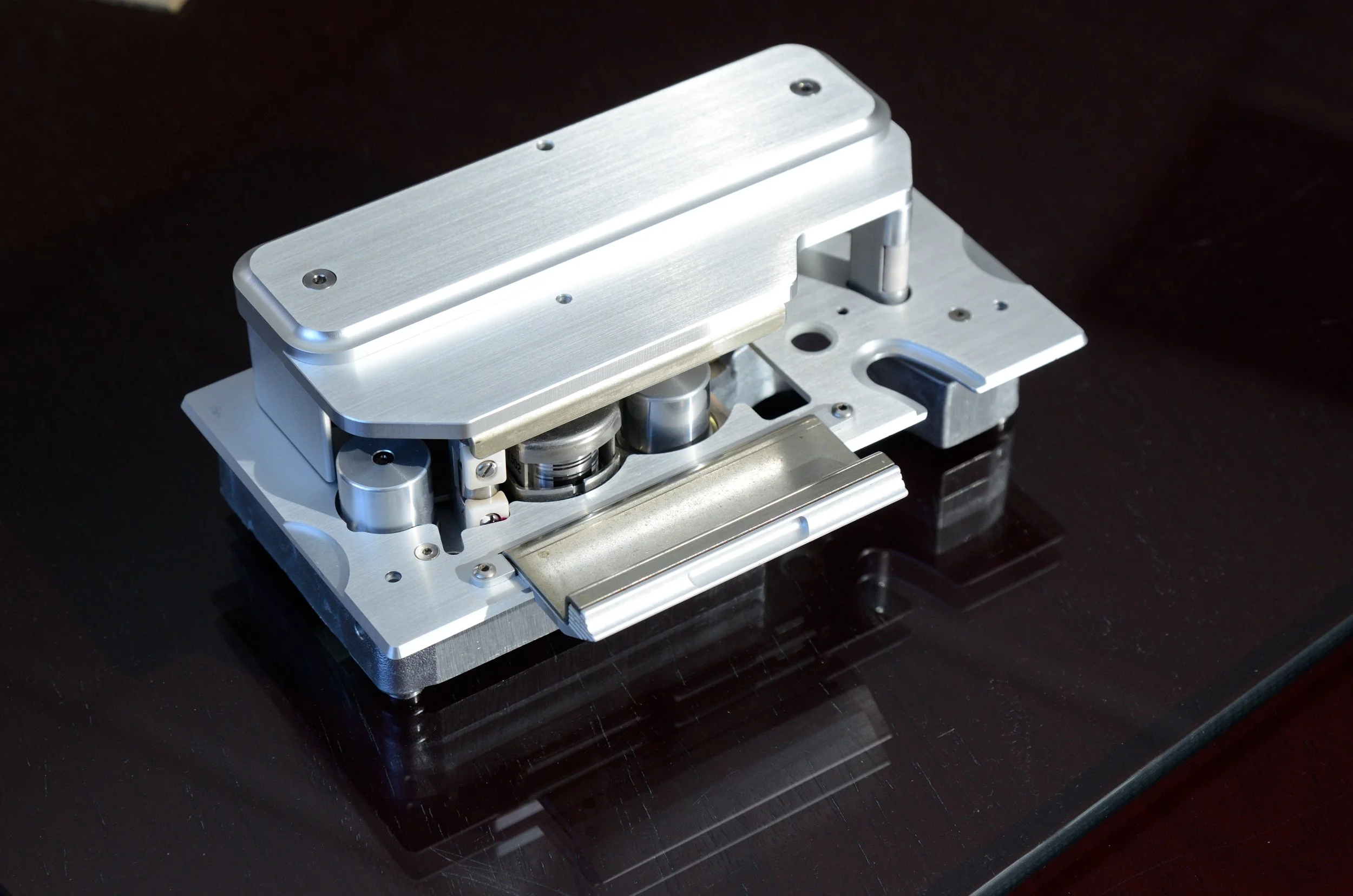
It’s what's not in the tape path that matters! Following the construction philosophy of our SHRO head blocks for the A80 platform, our head blocks for the A820 2-Channel also removed all unneeded heads, replacing them with high-precision, ultra-low-friction, low-flutter rollers. These earliest SHRO head blocks for the A820-2CH (shown on the left and below) were sold only with the “Stage One A820 reproducer” which we discontinued in 2012.
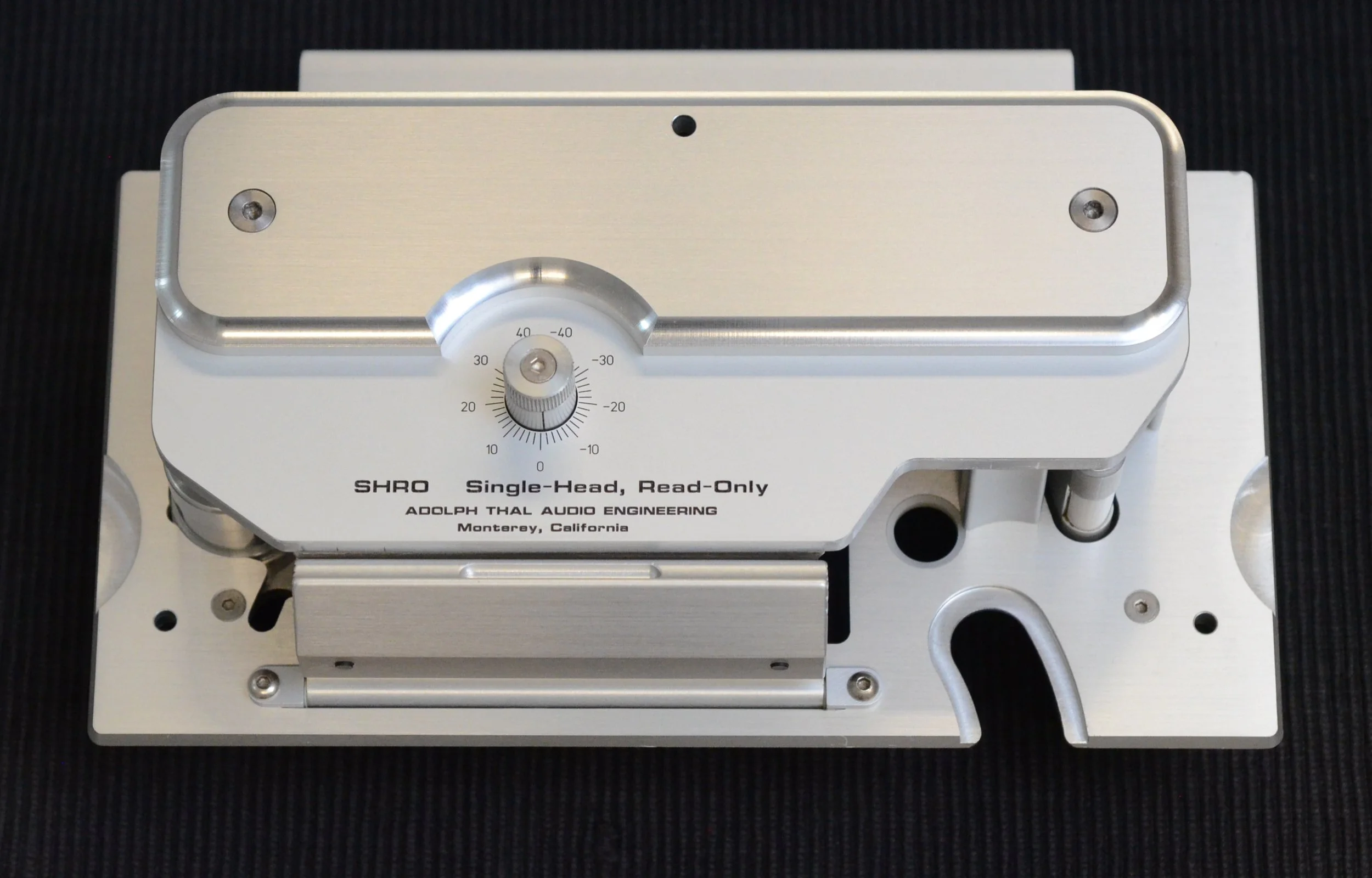
SHRO is not an ATAE invention. Following tape transport time base distortion studies in the late 1960s, the single-head reproducer concept was independently developed by AEG-Telefunken in Germany, Studer in Switzerland and 3M in the USA.
Today’s ATAE reproducers (either A80 or A820 based) come equipped with our third-generation head blocks that are entirely of our own design and manufacture (not pictured).
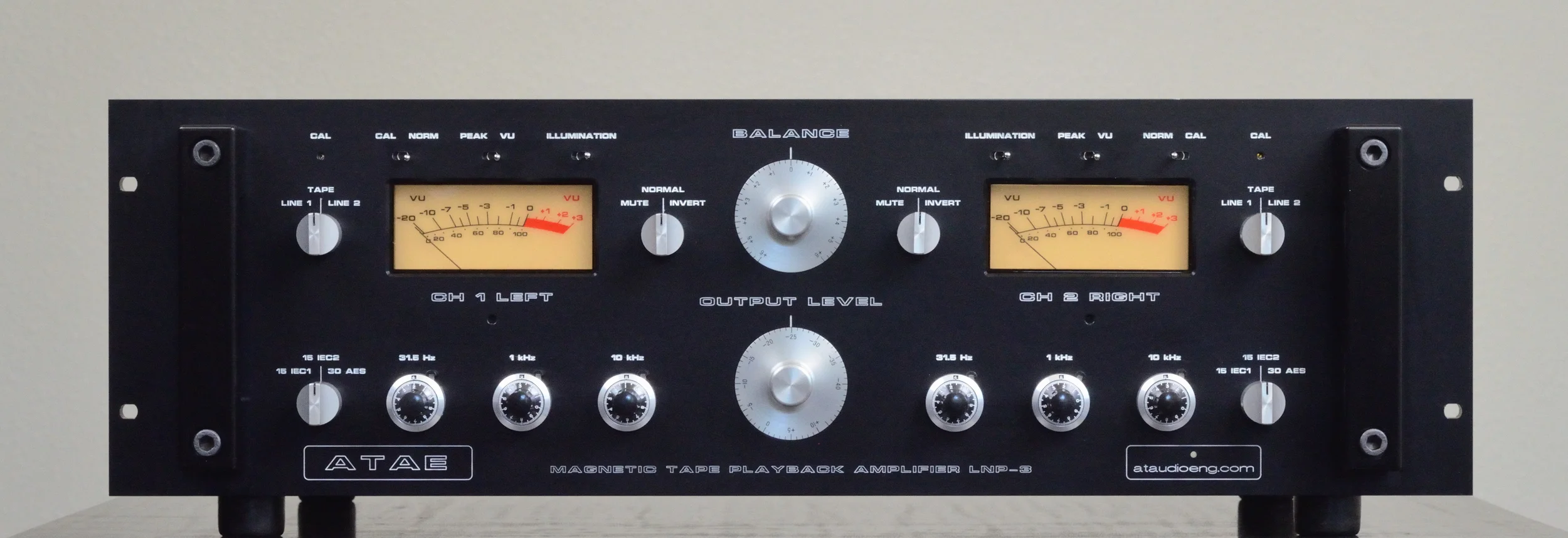
Our customers specify whose tape playback electronics (we are happy to suggest several) will go into their Model One or Two reproducer’s rack-mount tower base.
Shown here is our own LNP-3 model from 2012. Inside it is a real Cello P 603 and P 301. The VU meters and meter amplifier circuitry are from Studer.